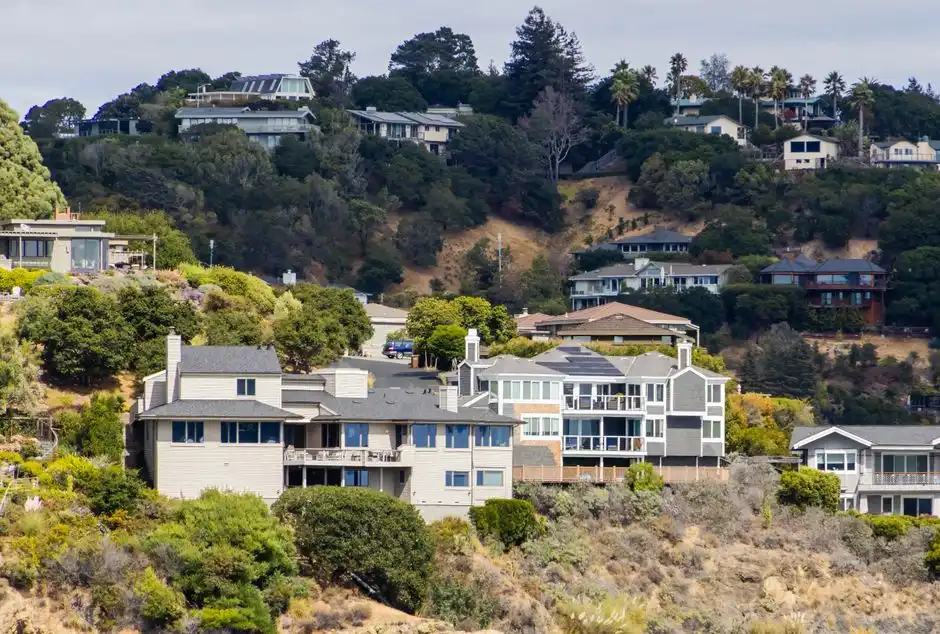
Preparing your Rancho Palos Verdes home for wildfire season means clearing and maintaining defensible space in three zones out to 100 feet, hardening the structure against embers, and having a written evacuation plan and go-kit ready before the first red flag warning. In this city that work is not optional housekeeping - it is the difference between a home that survives an ember shower and one that does not.
What follows is the same sequence we walk homeowners through after a close call: the seasonal calendar, the brush clearance rules, the ember fixes that matter most, the kit, and the evacuation plan. It is written for the way lots actually sit on the Hill, not for a generic suburb.
When is wildfire season in Rancho Palos Verdes?
Wildfire season in Rancho Palos Verdes runs roughly May through October, with the highest risk in September and October when Santa Ana winds push dry offshore air over the Peninsula. That said, the two most destructive fires in Los Angeles County history - the Palisades and Eaton fires - both started in January, which tells you the calendar is a guide, not a guarantee.
November is when we tell clients to stop thinking about last season and start working on the next one. The hills have greened up slightly from early rain, but the fuel load from summer is still there, and the window between now and spring is the cheapest time to get brush clearance and vent work done. Contractors are less booked in winter, and you are not paying red-flag-week prices.
Watch for the two triggers that matter: a National Weather Service red flag warning for the Palos Verdes Hills, and any day with sustained winds over 25 mph and humidity under 15 percent. On those days, a spark from a lawnmower, a chain dragging on a trailer, or a downed power line can start a fire that moves faster than you can pack.
What defensible space actually means on a Palos Verdes lot
Defensible space in Rancho Palos Verdes is the managed buffer between your house and the vegetation around it, divided into three zones that California's wildfire code (PRC 4291) defines out to 100 feet. On a flat suburban lot that is straightforward. On a Portuguese Bend or Lunada Bay slope lot with a canyon behind it, it takes real planning.
Zone 0: the first 5 feet
This is the ember-resistant zone, and it is where most homes fail. Nothing combustible within 5 feet of the structure - no wood mulch, no bark, no firewood stack, no bamboo screen against the wall, no plastic planter boxes. Replace mulch with gravel, decomposed granite, or concrete. If you have a wood fence touching the house, that is a wick straight into the attic.
Zone 1: 5 to 30 feet
Keep this lean, clean, and green. Irrigated low-fuel plants, spaced shrubs, no tree limbs within 10 feet of the roof or chimney. On the ocean side of the Hill, salt air and wind make people plant dense hedges for privacy - those hedges are the first thing that carries fire to a house.
Zone 2: 30 to 100 feet
Reduce fuel, don't sterilize it. Thin brush so shrubs are at least three times their height apart, remove dead material, and keep grass under 4 inches. On steep lots, this is the zone where a chipper and a crew save you a month of weekends.
If you are in an HOA, get the architectural committee involved early. We have seen homeowners do excellent clearance work and then get cited because the HOA rules and the fire code disagreed about a hedge. The fire code wins, but you want that conversation in writing before you cut.
Brush clearance rules and deadlines you need to know
Brush clearance rules for wildfire season in Rancho Palos Verdes are enforced by the Los Angeles County Fire Department's Fuel Modification Unit, and inspections typically begin in spring with compliance expected by early summer. The exact deadline shifts year to year, so check the current notice rather than relying on last year's date.
What the inspector looks for is consistent:
- Grass and weeds cut to 4 inches or less within 100 feet of the structure, or to the property line.
- Trees pruned so the lowest limbs are 6 feet off the ground, and no limb within 10 feet of a chimney or roof.
- No dead vegetation, no accumulated clippings, no woodpiles against the house.
- Roofs and gutters free of needles and leaves - a single gutter full of pine needles is enough to catch an ember.
- Address numbers visible from the street, day or night, so crews can find you.
Fines for non-compliance are real and they escalate. More importantly, an uncleared lot is a liability to your neighbors, and in a wind-driven fire, your neighbor's brush is your problem. If you are not physically able to do the work, hire a licensed clearance crew - most Palos Verdes properties run $800 to $2,500 for a full seasonal clearance depending on slope and acreage, and steep canyon lots at the top of that range.
For homeowners in the older pockets of the Hill, especially around Fire Damage Restoration in Portuguese Bend, the combination of mature trees, narrow access roads, and landslide-related ground movement makes clearance both more important and more complicated. We have worked those streets and the access is the part that surprises people.
Harden the house itself: the ember problem
Most homes that burn in a wildfire are ignited by embers, not by a wall of flame. An ember the size of a thumbnail can slip through a vent, land on a dry attic joist, and start a fire 45 minutes after the main fire front has passed. Hardening the house is about denying embers entry.
The highest-value fixes, in order:
- Vents. Replace standard foundation, attic, and eave vents with 1/8-inch mesh ember-resistant vents. This is the single most effective upgrade most homes can make.
- Roof and gutters. Class A roofing is required in high-fire zones, but the roof edge and gutter are where embers collect. Clean them before every red flag warning.
- Windows. Dual-pane tempered glass resists radiant heat far better than single-pane. If you have original single-pane windows facing a canyon, that is a priority.
- Decks. The underside of a deck is an ember trap. Enclose it with 1/8-inch mesh or noncombustible skirting.
- Chimney. A spark arrestor on the chimney cap costs under $200 installed and stops embers from entering the flue.
None of this is glamorous. All of it is cheaper than rebuilding. If a fire does get inside, the damage is rarely just the burn - smoke pushes through the whole house, and soot settles on every surface. That is the work our team handles under Smoke Damage Restoration Rancho Palos Verdes CA, and it starts the same day, not the following week.
Build an emergency wildfire kit that fits your household
An emergency wildfire kit in Rancho Palos Verdes should be packed to leave in under 10 minutes and cover at least 72 hours away from home. The generic lists you find online miss the local realities: pets, medications, and the fact that you may not be able to drive back up the Hill for days.
Pack it in a wheeled bin or duffel by the front door, not in the garage. In a fast evacuation, the garage is the first thing you may not be able to open.
- Water: one gallon per person per day for three days, plus pet water.
- Medications: a 7-day supply, plus a written list of prescriptions and dosages.
- Documents: passports, deeds, insurance policies, and a USB drive with photos of every room. That photo set is what your insurance adjuster will ask for first.
- N95 masks: wildfire smoke is the leading health hazard for people evacuating, not the flames.
- Phone chargers, a battery bank, and a hand-crank radio.
- Pet food, carriers, leashes, and vaccination records.
- Cash in small bills - card readers fail when power is out.
- A change of clothes and sturdy shoes per person. No flip-flops.
Check the kit every April and every October. Batteries corrode, medications expire, and kids outgrow shoes. A kit you have not opened in two years is a box of expired supplies.
Write a wildfire evacuation plan before you need it
A wildfire evacuation plan for Rancho Palos Verdes has to account for the fact that there are only a handful of roads off the Hill, and in a wind event they clog fast. Crenshaw, Hawthorne, Palos Verdes Drive, and Western are the main arteries. Know two routes from your house to a safe point off the Peninsula, and drive them once with your family so nobody is guessing.
Decide three things in advance:
- Where you go. A friend or relative in Torrance, San Pedro, or further inland. Not a hotel you have to book at the last minute.
- How you get your people. Who picks up the kids from school, who gets the elderly neighbor, who handles the pets. Write it down and text it to everyone.
- When you leave. The answer is earlier than feels necessary. If a red flag warning is issued and you have somewhere to go, go. Do not wait for an evacuation order.
Sign up for Alert South Bay and the county's emergency alerts, and keep your phone on loud overnight during wind events. The Rancho Palos Verdes alert system is how evacuation orders actually reach you.
One more thing: the landslide complex on the south side of the Hill means some roads can be compromised even without fire. If your plan depends on a single route through the Portuguese Bend area, build a second one. We have responded to calls where the fire was the smaller problem and the road closure was the bigger one, and our crews serving Fire Damage Restoration in Rancho Palos Verdes plan routes around that reality every time.
Common mistakes we see during wildfire prep
The mistakes we see during wildfire prep are consistent, and most of them come from doing the visible work and skipping the invisible work. Clearing brush feels productive. Replacing vents does not, so people skip it.
Here is what to watch out for:
- Clearing brush but leaving the woodpile against the house. A cord of firewood against a wall is a fire waiting for an ember.
- Skipping the gutters. Full gutters are the most common ignition point on a home that otherwise looks prepared.
- Assuming the HOA will handle it. They will not. Clearance is the homeowner's responsibility.
- Packing a kit but never telling anyone where it is. If your spouse or kids do not know, it does not exist.
- Waiting for the evacuation order. By the time the order comes, the roads are already full.
- Forgetting the garage. Paint, solvents, and propane tanks in the garage turn a small fire into a large one.
We see these every season, and the homes that come through a fire with the least damage are almost always the ones where someone did the boring work in advance. If a fire does reach your property, the cleanup is a different kind of job - fire cleanup Rancho Palos Verdes CA is what we do after the flames are out, and it starts with securing the structure and stopping further damage.
When to call a professional
Call a professional when the work involves heights, slopes, or anything you cannot safely do yourself - and call us the moment a fire has touched your property, even if the damage looks minor. Ember intrusion, smoke residue, and hidden char in an attic or wall cavity are not things you can assess from the driveway.
Our team at Fire Damage Restoration Rancho Palos Verdes handles the full sequence: emergency board-up, soot and smoke removal, structural repair, and odor elimination. We also help with the insurance documentation, which is where most homeowners lose time and money. If you are not sure whether you need us, call and describe what you are seeing. We will tell you honestly.
Frequently Asked Questions
How do I prepare my Rancho Palos Verdes home for wildfire season?
Clear defensible space in three zones out to 100 feet, replace vents with 1/8-inch ember-resistant mesh, clean gutters and roof edges, and pack a 72-hour go-kit. Do the brush clearance by early summer and re-check everything before each red flag warning.
What is defensible space in Rancho Palos Verdes CA?
Defensible space is the managed buffer between your home and surrounding vegetation, defined by California code as three zones out to 100 feet. Zone 0 (0-5 feet) must be noncombustible, Zone 1 (5-30 feet) lean and irrigated, and Zone 2 (30-100 feet) thinned and reduced.
When is wildfire season in Rancho Palos Verdes California?
Peak wildfire season runs May through October, with the highest risk in September and October during Santa Ana winds. Fires can and do start in winter - the Palisades and Eaton fires both began in January - so treat preparation as a year-round habit.
What should be in a wildfire emergency kit in Rancho Palos Verdes?
Three days of water (one gallon per person per day), a 7-day medication supply, documents and room-by-room photos, N95 masks, chargers, pet supplies, cash, and sturdy shoes. Pack it by the front door so you can leave in under 10 minutes.
How can I protect my home from wildfires in Rancho Palos Verdes CA?
Focus on embers, not flames. Install 1/8-inch mesh vents, enclose deck undersides, add a chimney spark arrestor, upgrade to tempered dual-pane windows, and keep the first 5 feet around the house free of anything combustible.
Get help with Fire Damage Restoration in RANCHO PALOS VERDES
Preparation lowers your risk, but it does not eliminate it. If fire or smoke has reached your home, we can be on-site to secure it, stop the damage, and start the restoration the same day.
Call Fire Damage Restoration Rancho Palos Verdes at (833) 929-6186 and tell us what you are seeing. We will walk you through the next step.